Delft and The Hague from Amsterdam: Vermeer’s Town, His View Fifteen Minutes Away, and Bullet Holes in the Wall
An hour south, Vermeer’s town and his most famous view sit fifteen minutes apart — the View of Delft hangs in The Hague, so the pairing is the point. The bullet holes from 1584 are still in the Prinsenhof wall.
The short version
- Trains run Amsterdam to Delft in about an hour (ns.nl), with tram 1 linking Delft and The Hague’s center in roughly fifteen minutes — the pairing logistics per the alarm being the whole plan.
- Delft is Vermeer’s town entire: born, worked, buried here — the Old Church’s leaning tower stands over his grave — while the Vermeer Centrum tells the life and the light; his actual paintings live elsewhere, which is the pairing’s founding fact.
- The New Church on the market square holds the state layer: William of Orange’s marble mausoleum above the royal crypt where the House of Orange-Nassau has been buried since 1584, with the 100-plus-meter tower climb as the town’s panorama.
- The Prinsenhof carries the alarm’s startling detail: William the Silent was assassinated here in 1584 — the first head of state killed with a handgun — and the bullet holes remain in the stairwell wall, protected under glass, with the museum around them telling the Dutch Revolt.
- Royal Delft — the last of the town’s original 17th-century potteries still producing — runs factory tours and painting demonstrations for the delftware layer, with the market square’s shops grading from masters to fridge magnets.
- The Hague’s Mauritshuis is the pairing’s payoff per the alarm: Girl with a Pearl Earring, the View of Delft, and Fabritius’ Goldfinch in a jewel-box palace of two dozen rooms (mauritshuis.nl) — with the Binnenhof’s parliament courtyard next door viewed from outside during its long renovation per the alarm’s standing note.

Getting there
The intercity drops you at Delft’s station steps from the canal grid; the tram stitches the pair whenever you’re ready. The order argues Delft-first: the town in morning light, the Mauritshuis in the afternoon when its small rooms absorb arrivals better — and Vermeer’s View, seen after walking his actual town, lands as the day’s designed climax. Thursday and Saturday put Delft’s general and book markets on the square; the Mauritshuis sells timed entry worth booking on weekends.
The day
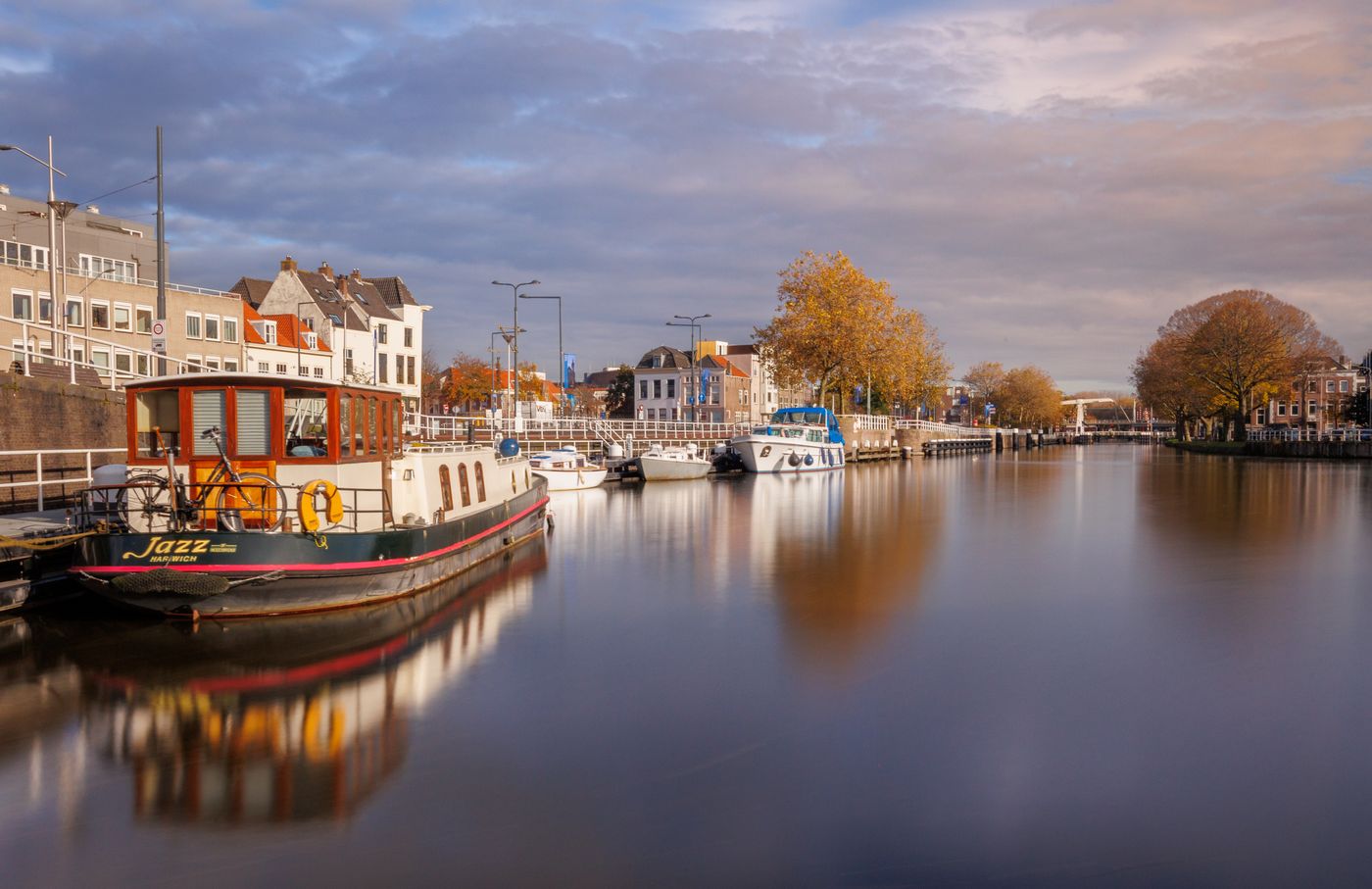
Delft’s market square opens it: the New Church tower climbed early (the town’s roofs, the canals, The Hague on the horizon), William’s mausoleum and the crypt story below. The canal ring walks painter-slowly — the Oude Delft’s lean and light explaining half of Dutch art — to the Old Church’s tilted tower and Vermeer’s floor slab. The Prinsenhof takes the pre-lunch hour: the Revolt told room by room, then the stairwell and the 1584 holes under their glass — history at point-blank range, presented exactly that plainly. Lunch on the square or a herring cart per courage. The tram crosses to The Hague mid-afternoon: the Mauritshuis’ two floors taken unhurried — the Girl’s gaze, the Goldfinch’s chain, and the View of Delft compared against the morning’s memory of the real skyline, which is the pairing per the alarm doing its work. The Binnenhof courtyard and the Hofvijver pond frame the exterior walk; the direct train home runs from The Hague’s own stations.
When to go
Year-round — museums and churches carry any weather, and the pairing’s indoor weighting makes it the network’s best rainy-day double. Spring adds the Hague’s coastal light and Delft’s canal blossom; December dresses Delft’s square with candlelight shopping evenings. Delft’s Thursday/Saturday markets are the atmospheric multipliers per the logistics note. Summer weekends argue the Mauritshuis morning-slot booking; winter walks in.
Frequently Asked Questions
Why isn’t the View of Delft in Delft?
Collections history: Vermeer’s works scattered at sale after his death, and the View entered the national collection at the Mauritshuis in 1822 — where it has hung since, fifteen minutes from its subject. Delft keeps the town, the grave, and the light; The Hague keeps the canvases. The alarm’s pairing-is-the-point clause is just the map being frank.
What exactly happened at the Prinsenhof?
On 10 July 1584, Balthasar Gérard shot William of Orange — leader of the Dutch Revolt — on the stairs of his Delft residence, the first assassination of a head of state by handgun. The musket-ball damage in the wall was preserved from the start and shows today under glass, with the museum presenting the Revolt, the reward-driven killer, and the aftermath at documentary register.
Is the Binnenhof visitable at all?
During the multi-year renovation, the complex is largely scaffolded and closed to the interior tours it once ran — the courtyard and Hofvijver views from outside are the current product, per the alarm’s spend-the-time-at-the-museum verdict. The Ridderzaal and tour program return as phases complete; check locally if parliament interiors are the trip’s priority.
Which delftware is real?
Look for the Royal Delft (De Porceleyne Fles) marks and the painter’s initials — the factory tour shows the hand-painting that justifies the prices, and the square’s shops run the full spectrum from atelier pieces to imported souvenirs. The honest rule mirrors this network’s alabaster and silver pages: watch it made, then decide what the mark is worth to you.
Delft-Hague or Haarlem from Amsterdam?
Haarlem (documented on this network) for the fifteen-minute square-organ-and-hofjes day; Delft and The Hague for the full Vermeer pairing at an hour each way. Short and gentle versus committed and cumulative — the honest Amsterdam week does both, and this pairing is the one that needs the earlier start.