Amsterdam Day Tours
I’m Serious Day Tour Man AI, your day trip expert. Ask me anything — where to go, how to get there, and what’s actually worth your day.
Amsterdam’s most famous booking isn’t a day trip at all: the Anne Frank House sells every ticket online, releases them on Tuesdays at 10 a.m. for dates six weeks out, and sells the peak slots in minutes — the full mechanics are in the city block below, because they decide more itineraries than any train schedule.
The radius itself runs on Dutch efficiency: the world’s most famous flower garden forty minutes away for eight weeks a year, windmills that still grind paint and press oil twenty minutes north, and Vermeer’s girl waiting in a jewel-box museum an hour south. Everything on the list works by train, bus, or bike.
Here’s what’s worth a day, with real times and honest trade-offs.

Popular Day Trips
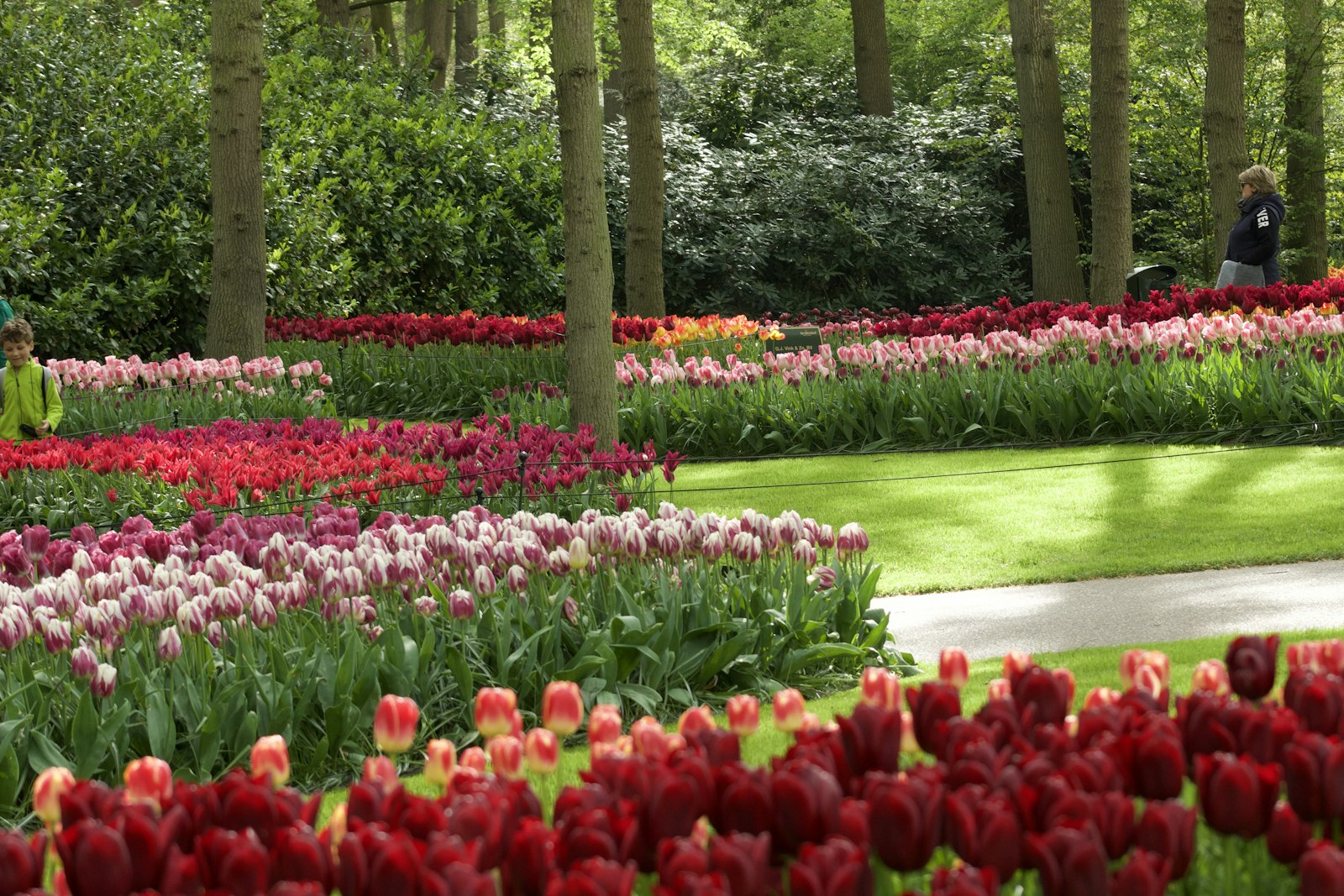
Keukenhof & the Bulb Fields
Eight weeks of tulips — timed to the day
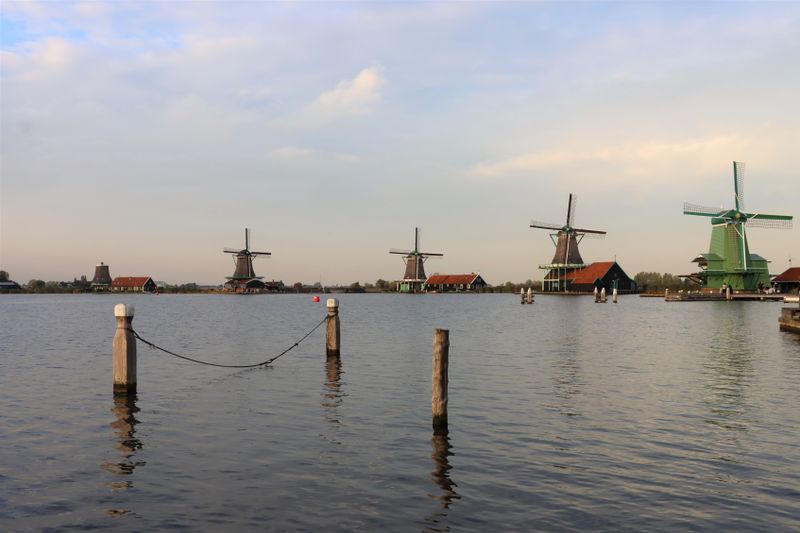
Zaanse Schans
Working windmills, seventeen minutes from Centraal
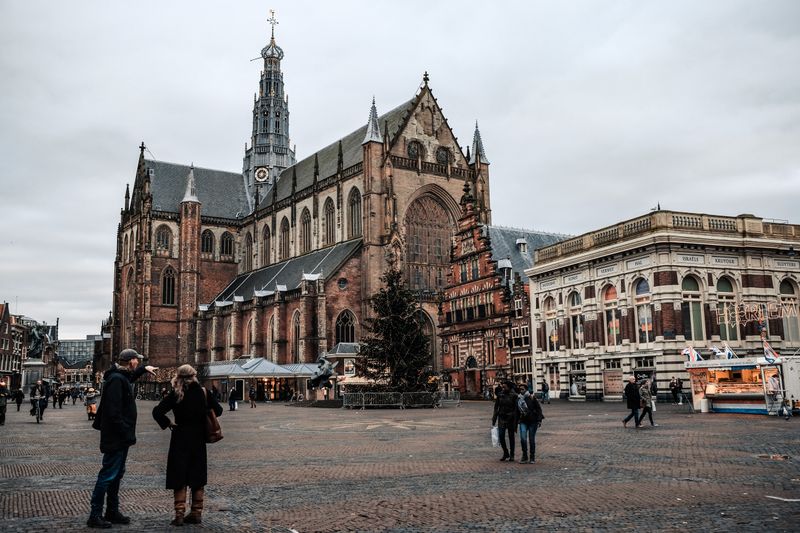
Haarlem
Fifteen minutes out — the shortest escape
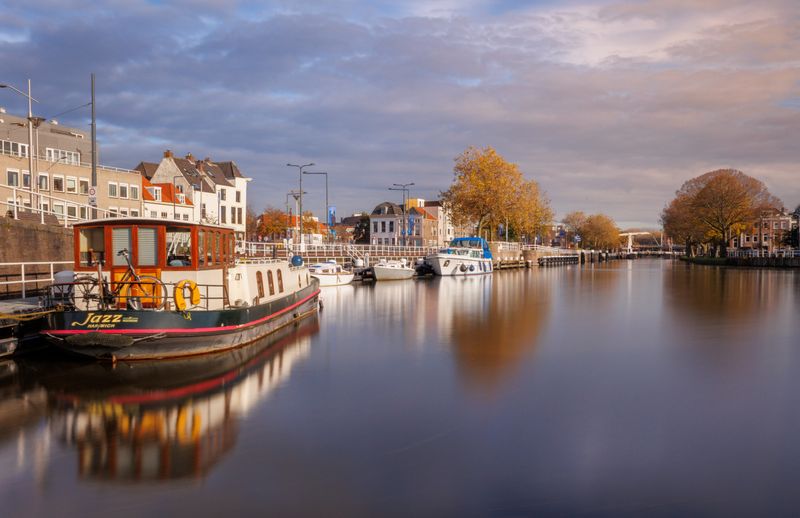
Delft & The Hague
Vermeer’s town and his most famous view, fifteen minutes apart
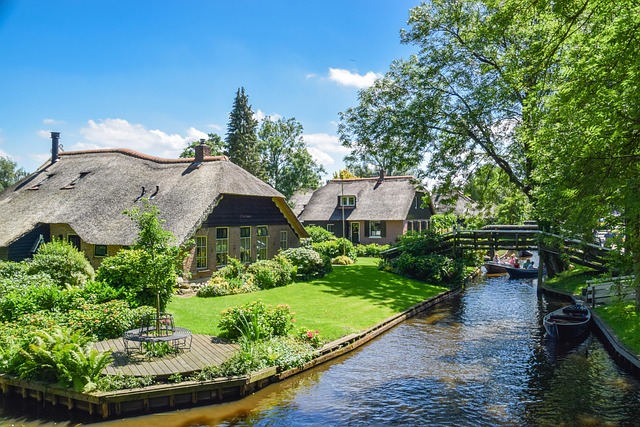
Giethoorn
A car-free village of canals, two hours northeast
Keukenhof & the Bulb Fields — Eight Weeks of Spring
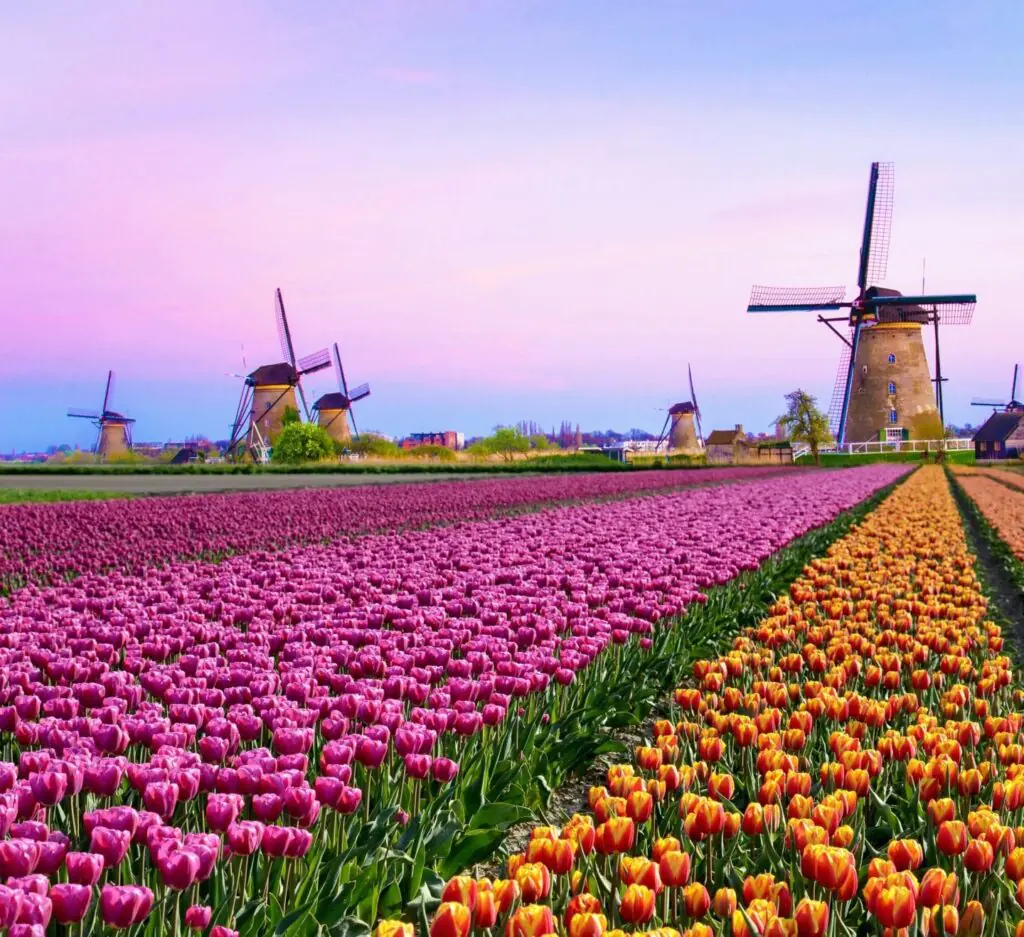
The season first, because it is the entire point: Keukenhof opens for roughly eight weeks each spring — mid-March to mid-May, with the current season’s exact dates on the official site — and the surrounding bulb fields run their striped color on the same clock, peaking in mid-April most years. Outside those weeks the garden is closed and the fields are dirt; no tour changes that.
The garden: seven million bulbs across 32 hectares of designed woodland — tulip rivers, hyacinth drifts, the indoor pavilions where the growers show their newest varieties — booked as timed e-tickets on keukenhof.nl, with the combination bus-plus-entry tickets from Schiphol and the city solving transport in one purchase. The rules: weekdays beat weekends by half the density, opening hour beats everything, and the Easter and King’s Day windows are the crush deliberately chosen or avoided.
The upgrade locals prefer: rent a bike at the garden or in Lisse and ride the bulb-field lanes themselves — the striped horizons run along public roads, free, and the fields the growers fence off are fenced for a reason. The Flower Parade (one April Saturday; check the date) rolls float-borne millions through the region. Half day for the garden, full with the fields, and note that this is the most seasonal entry in the Netherlands.
Zaanse Schans & the Zaan — Working Windmills
Twenty minutes north by train-plus-walk or direct bus, Zaanse Schans collects the Zaan district’s surviving industrial heritage into one riverside village: working windmills that still saw timber, grind spices, and press oil — climb into the mechanisms while they turn — alongside clog-carving and cheese-making demonstrations, green wooden houses, and the world’s first industrial zone telling its own story at the Zaans Museum.
The village itself is free to walk, the individual mills and museums ticket separately (the Zaanse Schans Card bundles them), and the site’s popularity is its own weather — mid-morning through mid-afternoon in season runs coach-dense, so the early-or-late rule applies absolutely: before 10 or after 4, the village returns to itself, and golden hour along the dike is the photograph everyone came for.
Add Zaandijk across the river for the local-café lunch the village lacks, and the Monet trail — he painted the Zaan’s mills and houses in 1871, and the markers show where. Two to three hours plus travel, family-proof, and clear about what it is: a curated open-air museum of working machines, better than a theme park and not to be mistaken for a found village.
Read the full Zaanse Schans day-trip page.
Haarlem — The Local Pick
Fifteen minutes west, Haarlem is the day trip Amsterdammers take: a Grote Markt that out-squares most capitals — the Gothic church of St. Bavo at its head holds the Müller organ both Mozart (age 10) and Handel played, and the market days (Saturday’s the classic) fill the cobbles the way four centuries intended — surrounded by lanes of independent shops that explain the city’s shopping-town reputation without a chain in sight.
The museums punch high: the Frans Hals Museum stages the civic-guard portraits in the almshouse rooms they were painted for, and Teylers — the country’s oldest museum, running since 1784 — preserves its Enlightenment cabinet-of-wonders interiors, fossils-and-instruments displays lit as they were by daylight, with Michelangelo drawings in the vault. The hofjes — the hidden almshouse courtyards — open their doors to quiet visitors on weekdays; the tourist office map locates them, and the silence rule inside is the entry fee.
In Haarlem itself, the Jopenkerk brews inside a converted church for the lunch stop, the windmill De Adriaan poses over the Spaarne, and the beach at Zandvoort sits ten more minutes down the same rail line for the sand-and-sea addendum. Half a day that routinely stretches to full, zero logistics, and the correct first taste of the Netherlands beyond the ring.
Read the full Haarlem day-trip page.
Delft & The Hague — Vermeer’s Line
The southern double runs on one rail corridor, an hour out. Delft first: Vermeer’s town holds its two market-square towers, the canals he painted, and the porcelain that carries its name — Royal Delft, the last of the original factories, runs the painting-room tours, while the Vermeer Centrum tells the painter’s story straight (no originals here; the town is the artifact). The New Church’s tower climb reads the whole compact center; the Old Church’s leaning tower holds Vermeer’s grave.
The Hague, ten minutes on, holds the paintings: the Mauritshuis — the Girl with a Pearl Earring, Vermeer’s View of Delft (see the town, then the painting, in one afternoon — the pairing is the point), Rembrandts and Fabritius’s Goldfinch — in a jewel-box palace whose timed tickets book easily except at blockbuster moments. The Binnenhof’s parliament courtyard, the Peace Palace’s gates, and Escher in the Palace fill the second museum hour by taste.
Scheveningen’s pier and beach conclude the line for summer visits, and Madurodam’s miniature Netherlands handles the family vote. Delft morning, Mauritshuis afternoon, home by dinner: more great art for the travel time than any day on this list.
Read the full Delft & The Hague day-trip page.
The Waterland Loop — Edam, Volendam, Marken
The classic north loop covers the old Zuiderzee’s shore towns, thirty to forty minutes by bus or, correctly, by rental bike along the dikes. Edam is the quiet aristocrat: the cheese town’s summer Wednesday-morning cheese market re-stages the carrier guild’s trade (July–August; check the dates), and the rest of the year the canals, teetering bell tower, and cheese shops carry it with a tenth of the neighbors’ crowds.
Volendam plays the extrovert: the dike-top street of fish stalls, costume-photo studios, and souvenir intensity above a working harbor — take it as the cheerful performance it is, eat the kibbeling (fried cod chunks, the local snack) at the stalls, and catch the summer ferry across to Marken, the former island whose green-and-white wooden houses on their mounds kept the old ways longest; the lighthouse walk out the dike is the loop’s best quiet hour.
The frame: bus or bike out, ferry across, bus home — a half-to-full day of pretty, easy, occasionally kitschy Holland, best with the Edam-first routing that saves Volendam’s intensity for when you’re fed. The cheese-wheel souvenir survives any suitcase; the wax-costume portrait is between you and your conscience.
The Anne Frank Rules, the Museum Slots & Amsterdam Itself
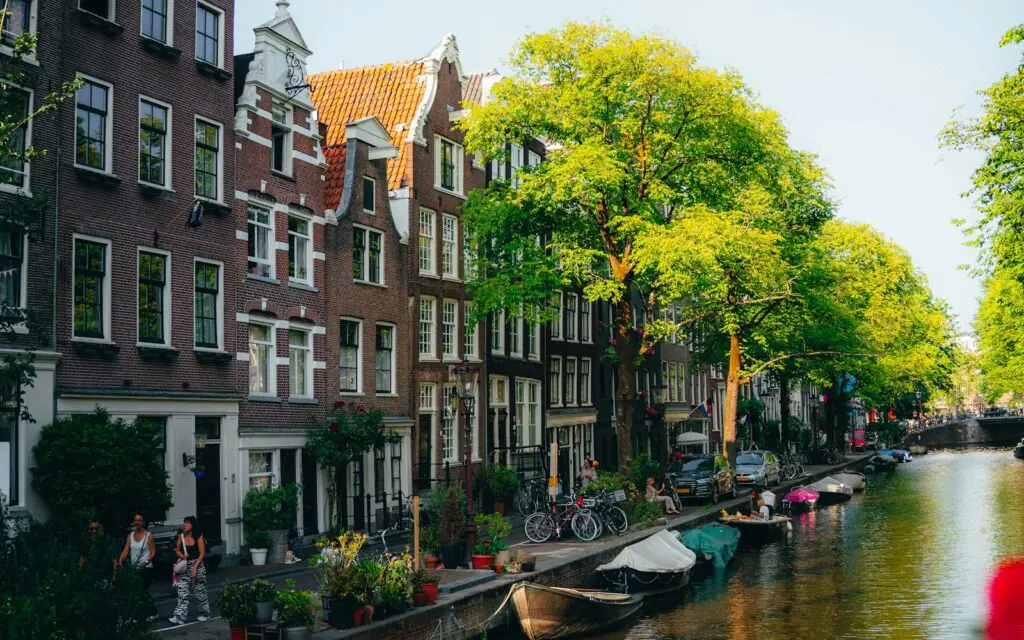
The Anne Frank House mechanics, exactly, because they are strict and widely misunderstood: every ticket sells online at annefrank.org only — no door sales, no legitimate resellers, and neither the I Amsterdam Card nor the Museumkaart is valid here. Tickets release every Tuesday at 10:00 a.m. Amsterdam time for the full week falling six weeks later, peak-season slots sell out within minutes (be in the queue before 9:55, take an evening slot if mornings vanish — the house opens late and the 6–10 p.m. window both lasts longest and visits quietest), and a same-day batch has been released at 9 a.m. for the flexible. Arrive early for your slot; late entry is refused. The visit itself is taken in the register the annex commands — unhurried and quiet — and the introductory programme is worth its supplement for anyone arriving without the history.
The other slots: the Rijksmuseum and Van Gogh Museum run timed tickets (the Van Gogh sells out days ahead in season; the Rijks breathes easier), and the Museumkaart or city card math works for multi-museum itineraries everywhere except the house above. The canal-ring boat hour remains the right orientation, taken early or at lights-on.
The living city: the bike rules protect everyone — never walk in the bike lane, look four ways, and rent only if you already ride; the coffeeshop-versus-café vocabulary distinction is real and worth knowing regardless of intentions; and the brown cafés’ bitterballen-and-biertje hour is the local institution that needs no booking. Eat the herring from the cart (whole, tradition-style, or chopped with onions — both correct), the rijsttafel as the colonial-history dinner it is, and the apple pie at the famous Jordaan address if the line agrees. Season math: King’s Day (April 27) turns the entire city orange and books itself out; tulip season stacks onto Easter crowds; summer runs long and light; and the January–February quiet is the connoisseur’s Amsterdam, museums at half density and the canals occasionally, magically, frozen.
Full day-trip pages: Giethoorn.
Frequently Asked Questions
How do Anne Frank House tickets work?
Online only at annefrank.org — released Tuesdays at 10 a.m. Amsterdam time for the week six weeks out, sold out in minutes at peak, with a same-day 9 a.m. batch for the flexible. No door sales, no valid resellers, no city-card entry; evening slots last longest and visit quietest.
When is Keukenhof open?
Roughly mid-March to mid-May only — about eight weeks, with exact dates on keukenhof.nl and the fields peaking around mid-April. Book timed e-tickets (the bus-combo tickets cover transport), go at opening on a weekday, and rent a bike for the free public-road bulb fields.
Is Zaanse Schans free?
The village, yes — walking the site costs nothing, while individual mills and museums ticket separately (a card bundles them). The rule is early or late: before 10 or after 4 the coaches are gone and the dike returns to itself.
Where is Girl with a Pearl Earring?
The Mauritshuis in The Hague, an hour by train — pair it with Delft ten minutes away and see Vermeer’s View of Delft the same afternoon as the town it paints. Timed tickets book easily outside blockbuster shows.
What’s the most local day trip from Amsterdam?
Haarlem, fifteen minutes west — the Grote Markt, the Frans Hals and Teylers museums, hidden hofjes courtyards, and a brewery in a church. Saturday market days are the classic pick; Zandvoort’s beach extends the line.